

Here’s a puzzle for your first drone build. You have a battery full of energy and four motors that need it. Why not just wire them together? If you try that with a typical brushless drone, the motors won’t spin. The part that makes them spin is small and easy to overlook: the ESC.
What does an ESC do?
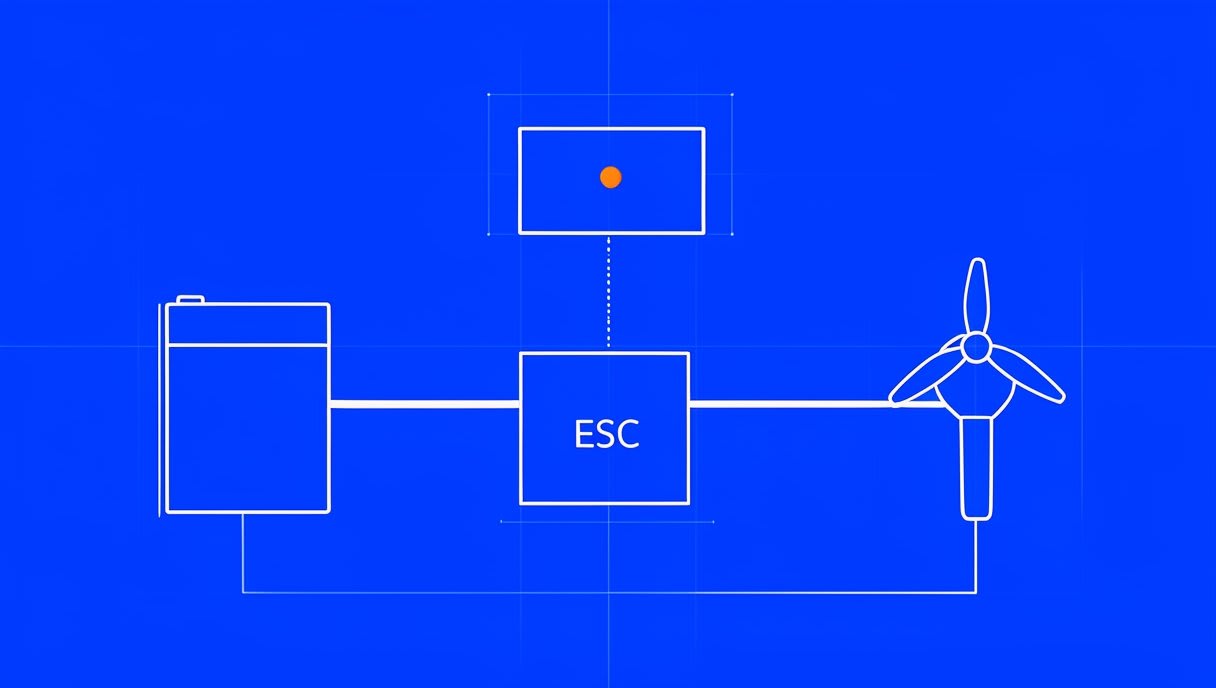
ESC stands for electronic speed controller. It sits between the flight controller, the battery and one motor. The flight controller tells it how fast that motor should spin, and the ESC uses battery power to make the motor spin at that speed. This applies to typical brushless drones, which covers most hobby, FPV (first-person view) and camera quadcopters. Tiny toy-sized drones can work differently, as we’ll see later.
Key takeaways
- An ESC turns the flight controller’s speed command into controlled power for a motor.
- A brushless motor needs an ESC to switch power through its three phases in sequence.
- Fast, independent changes in motor speed let a drone stay stable and move.
So how does a command like “spin a bit faster” turn into an actual change in speed?
How does a command become motor speed?
Think of a restaurant. The flight controller is the head chef who decides what each dish needs. The ESC is the cook at the stove, and the battery is the gas supply. The head chef never touches the flame. They call out instructions, and the cook controls the heat.
The signal path
The flight controller is the drone’s brain. It reads its sensors, such as the gyroscope that senses rotation, many times a second. It then works out how fast each motor should spin and sends a speed command to each ESC. That command carries information, not much power. It says “this fast”, and nothing more.
The power path
The heavy current comes from the battery. It flows into the ESC, and the ESC decides how that power reaches the motor. So the flight controller gives the instruction, and the ESC handles the motor’s power. Here’s the full chain in order:
flight controller: "motor 1, spin faster"
ESC: delivers battery power to motor 1 in a faster pattern
motor 1: spins faster
propeller: pushes more air down
That middle step, “in a faster pattern”, is where the real work happens.
Why can’t a brushless motor connect straight to the battery?
A brushless motor has coils of wire in three groups, called phases. Around them sit permanent magnets attached to the part that spins. When current flows through a coil, it becomes an electromagnet and pulls on the nearest permanent magnet. Now picture three people standing in a circle, taking turns to tug a spinning wheel. If they pull one after another, in the right order and at the right moment, the wheel keeps turning. If everyone pulls at once and holds on, it just stops in place.
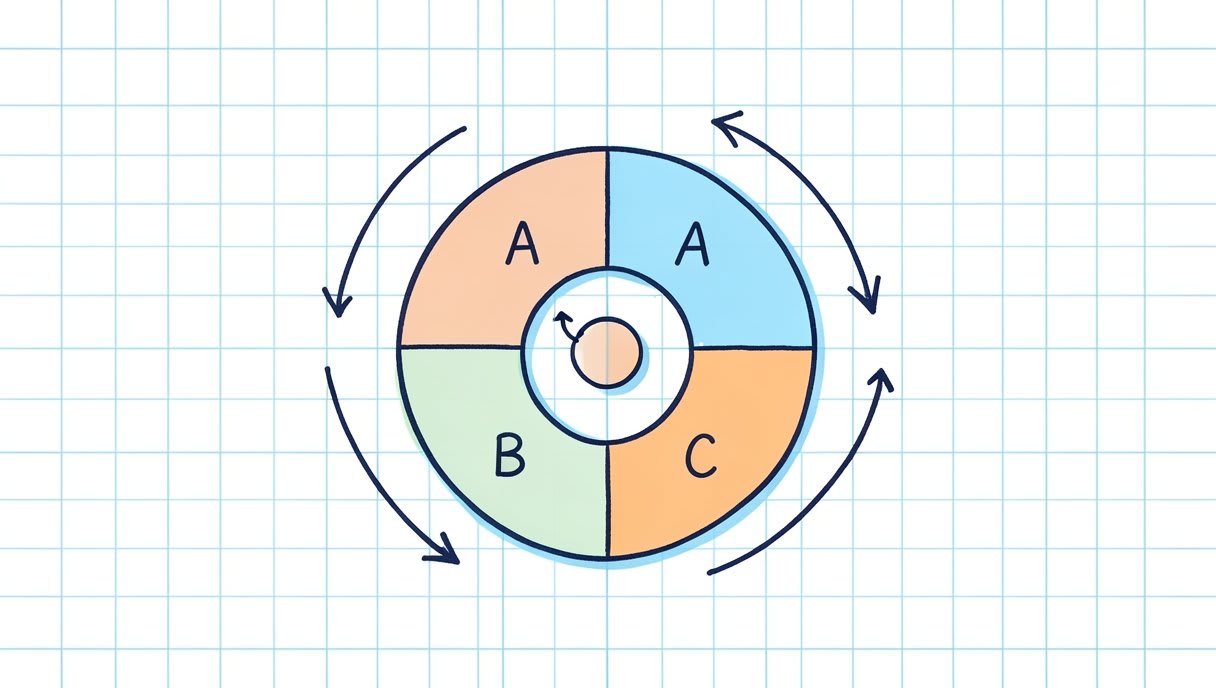
That’s what energising the phases in sequence means: sending current to phase A, then B, then C, round and round. A battery gives a steady, one-direction current. It can’t take turns on its own. Older brushed motors solve this mechanically: small contacts called brushes rub against the spinning part and switch the current as it turns. A brushless motor has no brushes, so something electronic must do the switching. That’s the ESC’s job. The ESC switches power between the phases very rapidly, keeping the motor turning. To change the speed, it changes how quickly it steps through the sequence and how much power it sends.
Why does fast speed control keep a drone in the air?
A helicopter can tilt its rotor blades to steer. A typical quadcopter has fixed propellers, so it has only one tool: changing the speed of each motor. That means the flight controller is constantly adjusting. A gust tips the drone slightly, the gyro senses it, and the flight controller tells one side to push harder. The ESCs have to respond quickly, and each motor has to be controlled on its own, or the correction arrives too late.
Climb, descend, tilt and turn
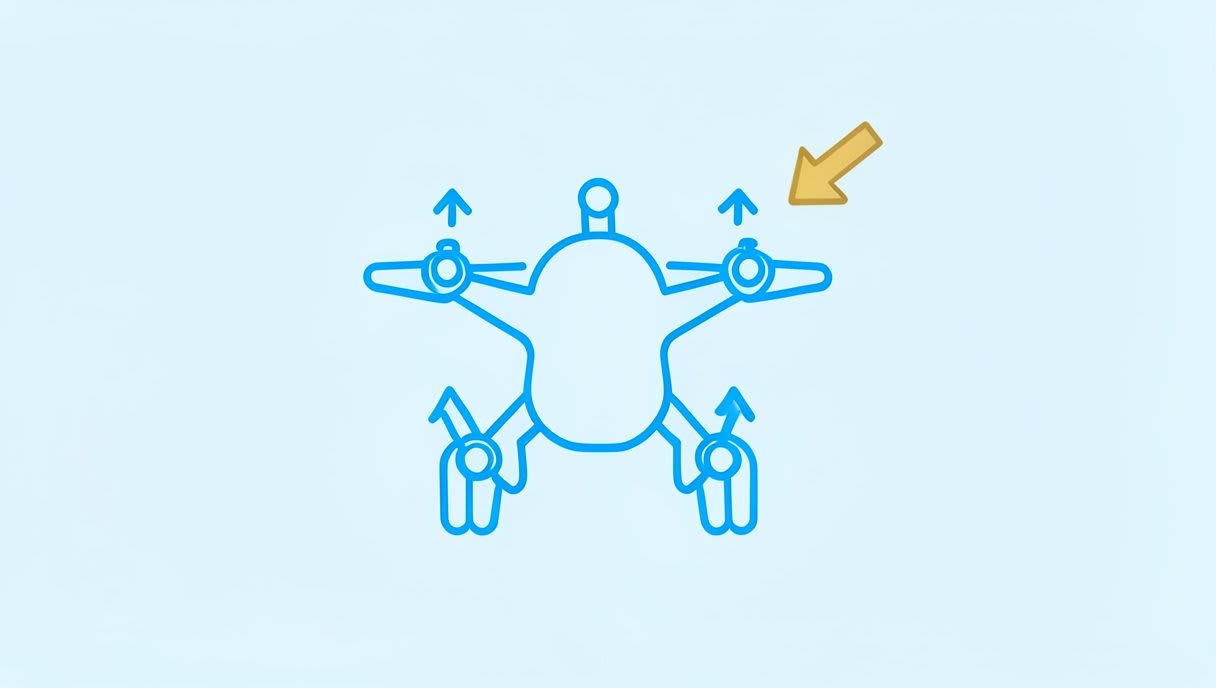
Here’s how a quadcopter uses those speed changes:
- Climb: all four motors speed up together, so the drone pushes more air down and rises.
- Descend: all four slow down together, and the drone sinks gently.
- Tilt forward: the rear motors speed up compared with the front ones, the nose dips, and the drone moves forward.
- Turn on the spot: neighbouring propellers spin in opposite directions. Speeding up one diagonal pair and slowing the other lets the twisting forces win on one side, so the drone rotates.
Want to feel how those control inputs change a drone’s movement before touching any hardware? Try the free browser flight simulator. It runs in your browser with keyboard controls and needs no install.
Do all drones use ESCs?
Not all of them. Typical brushless drones need ESCs. Tiny brushed drones can use simpler motor-driver circuits, because their brushes already handle the switching. If you’re unsure which kind of motor you’re looking at, our guide to brushless vs brushed motors explains the difference.
Where can you learn more?
To see how a real open-source autopilot handles copters, explore the ArduPilot Copter documentation, written and maintained by the ArduPilot project and its community. If FPV and racing flight control interest you, look at Betaflight, an open-source flight control project built by its own community. If you’re getting ready for a real build, read our setup guide for your first drone.
FAQ
Can you connect a brushless motor directly to a battery?
No. A brushless motor needs its three phases energised in sequence, and a battery alone can’t do that switching. An ESC, or other motor-control electronics, has to do it.
How many ESCs does a quadcopter need?
A brushless quadcopter needs one ESC channel per motor, so four in total. These can be four separate ESCs or one combined “4-in-1” board that does the same job.
Does every drone have an ESC?
No. Typical brushless drones use ESCs, while tiny brushed drones can use simpler motor-driver circuits.
Try it yourself
Now that you know what happens between the flight controller and the propellers, go and fly. Start with the free Aasma BYOD flight simulator at sim.aasmaaerospace.in, which runs in your browser with no install. When you’re ready to work with real hardware, explore Aasma’s drone learning kits. Here’s something to think about next. If the ESC is the cook at the stove, how does the head chef’s call actually reach it? That’s the story of how a flight controller sends commands to an ESC.


